Our Successes
Respiratory Health Association has been a local public health leader in metropolitan Chicago since 1906. The outline below shares how the organization was established and explains our deep roots in addressing local respiratory issues. Today, the association works to prevent lung disease, promote clean air and help people live better through education, research and policy change.
1906: Tuberculosis is one of Chicago’s largest health threats. Miss Harriet Fulmer and Dr. Theodore B. Sachs of the Visiting Nurse Association establish Chicago Tuberculosis Institute on March 17. One of Dr. Sachs’s first acts as president is to open a dispensary on Elm Street. Dr. Sachs is a towering figure in the fight against TB, becoming founder and the first president of Tuberculosis Institute, and presidents of both the National Tuberculosis Association and Chicago’s Municipal Tuberculosis Sanitarium.
1920: In the belief that sound health practices would ward off TB, we develop the Modern Health Crusade, which encourages students to brush their teeth, bathe and exercise regularly, get sufficient sleep and take vitamins. More than 136,000 students enroll in the program. Our nurses travel among schools giving physical checkups.
1925: After a 20-year battle, we help pass legislation requiring tuberculin testing for cows providing milk to Chicago residents.
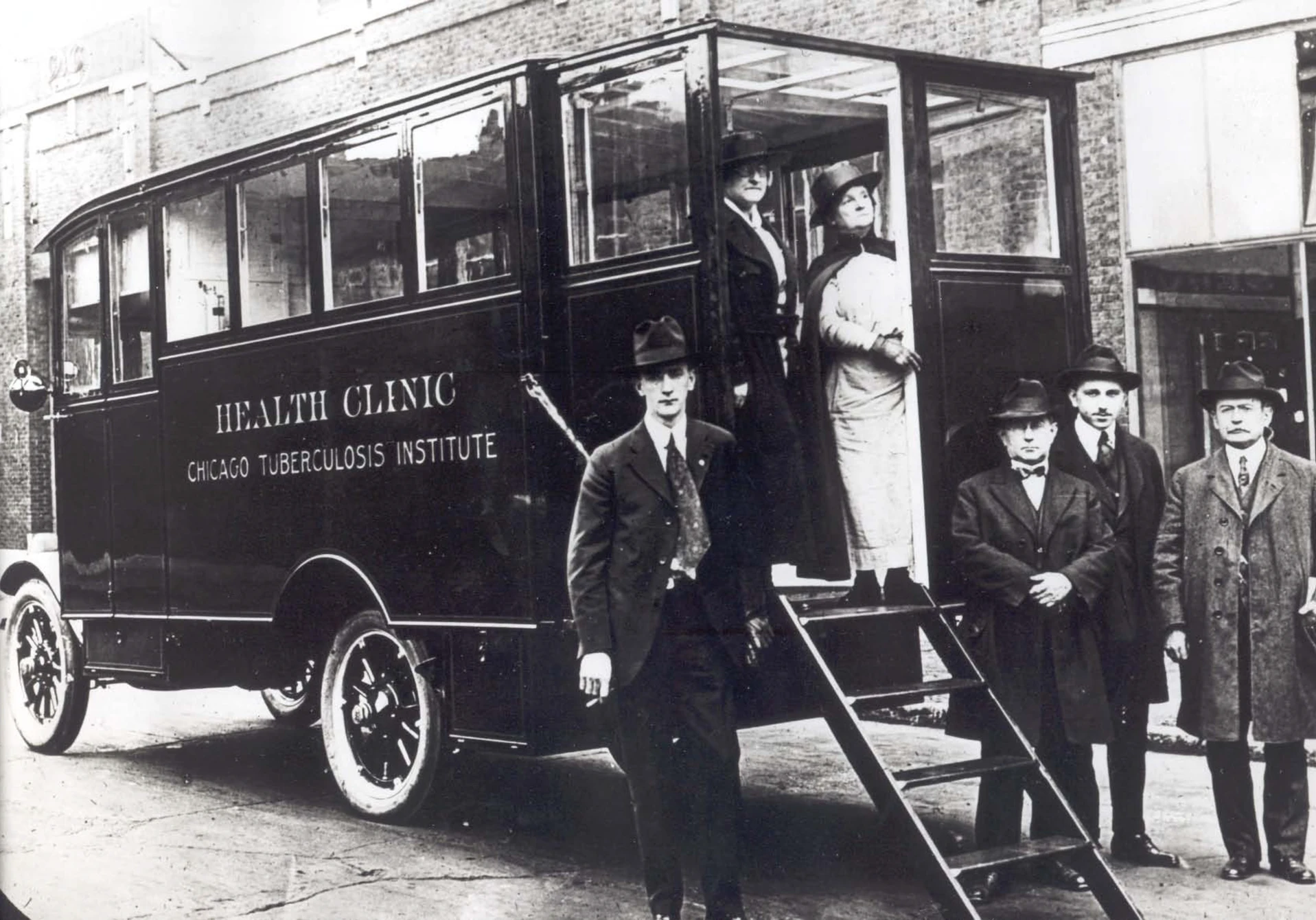
The Institute’s traveling clinic was put into operation on May 17, 1917 because of the pressing need for clinical service. A schedule of 42 stops were published to alert the public to the clinic’s arrival. Its operations continued until 1921 when there were enough health centers and nurses were provided with automobiles to transport patients to the centers.
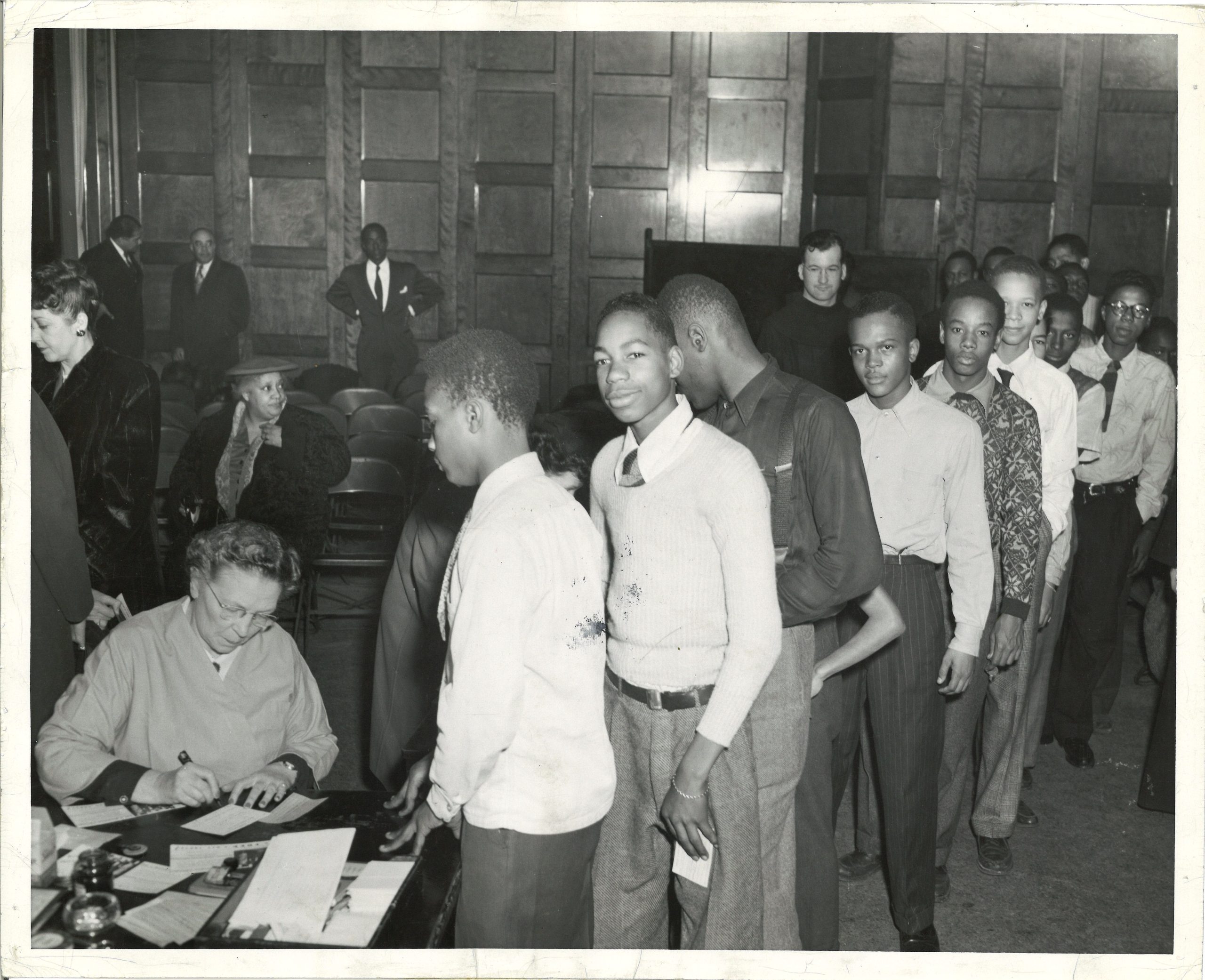
Corpus Christi High School student queue up for X-Rays on opening day of Provident Hospital project.
1931: In response to an influx of Mexican immigrants, we set up an office on South Halsted Street to address the TB needs of Spanish-speaking residents. We also establish a separate, culturally appropriate program for African Americans, which includes grants to Provident Hospital.
1937: Chicago Tuberculosis Institute becomes Tuberculosis Institute of Chicago and Cook County.
1940: We organize our first research committee.
1943: The long search for a TB cure is partially realized when Dr. Selman A. Waksman of Rutgers University discovers streptomycin, a breakthrough antibiotic that immediately arrests TB’s progress.
1946: To combat a still-high number of active tuberculosis cases, we partner with Municipal Tuberculosis Sanatorium to use chest x-rays to assist with TB detection.
1948: We move into our first permanent home at 1412 W. Washington Blvd., an area with Chicago’s highest TB rates.
1956: More than 1 million annual x-rays are given, up from 323,228 in 1947. The busiest x-ray screening unit in the world is set up in Chicago’s City Hall. Following a decline in TB deaths, the National Tuberculosis Association votes to broaden its mission to include other respiratory diseases.
1964: A bequest of $130,000 from Mrs. Bertha Kramer allows us to double our space and buy the 22,500-square-foot property at 1440 W. Washington Blvd., where we exist today.
1965: Tuberculosis Institute of Chicago and Cook County, Chicago Heart Association (now American Heart Association of Metropolitan Chicago), and other local health organizations form the Illinois Interagency Coordinating Committee on Smoking and Health (now the Illinois Coalition Against Tobacco – ICAT). The committee works in conjunction with the National Interagency Council on Smoking and Health, focusing its first meetings on the issue of tobacco company sponsorship of sporting events and other large public events. Our board members, Diana Hackbarth and Janet Williams, were early participants to ICAT. Through the 80s and 90s, ICAT would fight against big tobacco sponsorship of public events and would advocate for state and local clean indoor laws. The group played a prominent role in passing the Chicago Clean Indoor Act as well as the Smoke-free Illinois Act.
1967: In partnership with Roger Blackmore, a teacher at Skokie’s Niles West High School, we develop “I’ll Never Smoke” tobacco education classes. We also distribute 50,000 “Yes, I mind if you smoke” buttons.
John Kirkwood, our first Director of Environmental Health, testifies before the City Council and the Illinois Air Pollution Control Board in support of tighter air pollution standards. He also organizes the Clean Air Coordinating Committee and scores a major victory by winning an environmental suit against the Illinois Environmental Protection Agency.
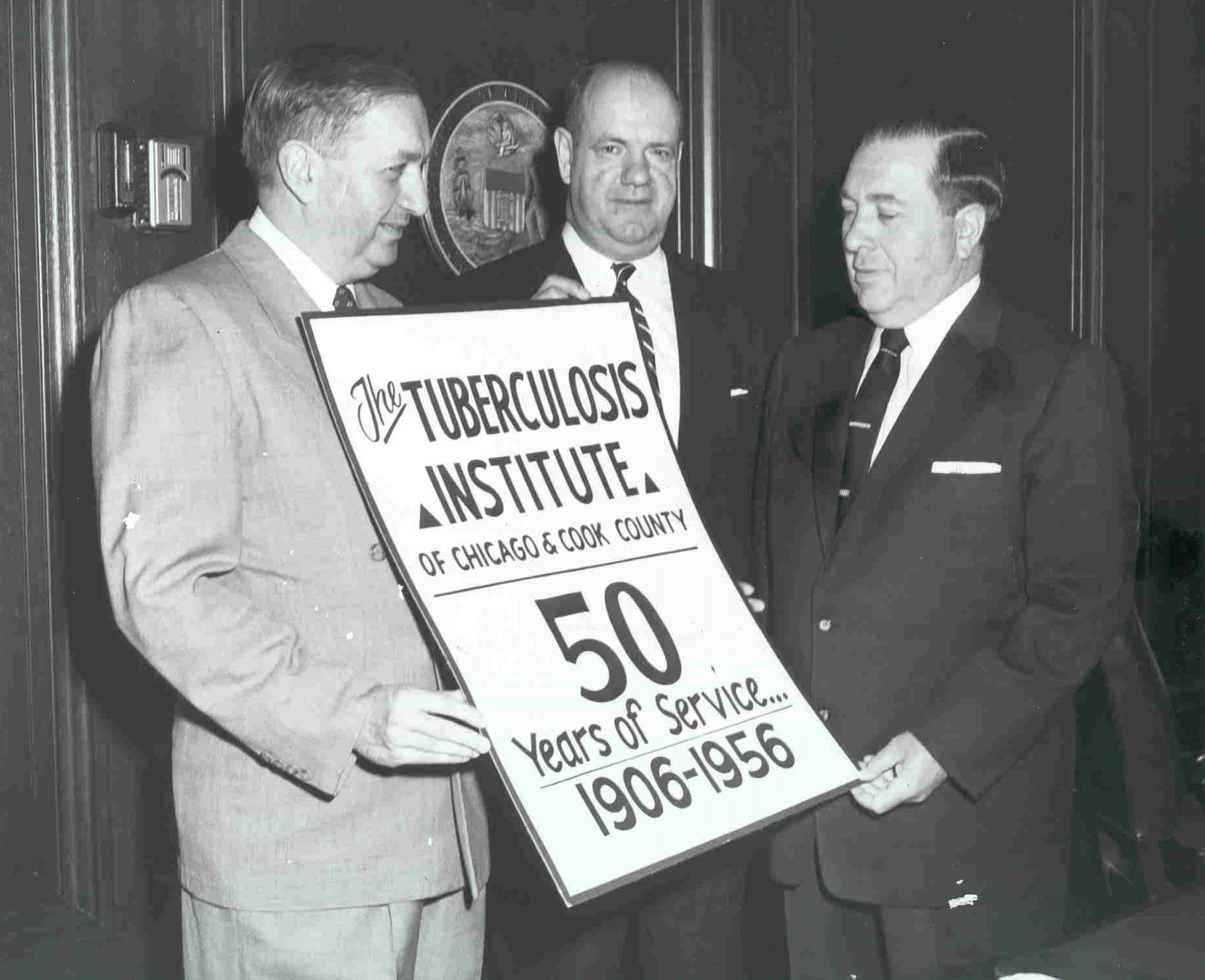
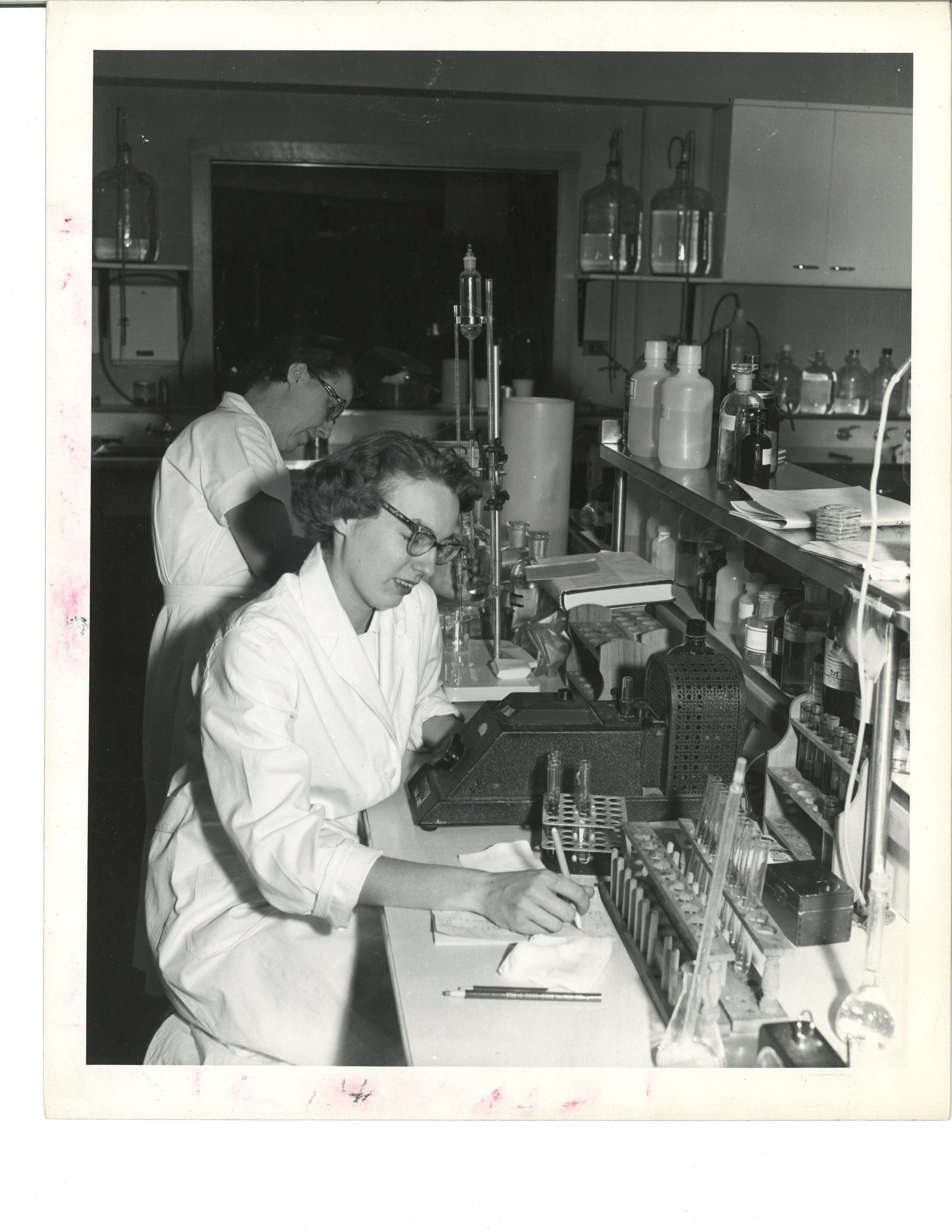
1972: Tuberculosis Institute of Chicago and Cook County changes its name to Chicago Lung Association (CLA), a reflection of our broadening focus.
1985: Our research endowment is formed, doubling our research efforts.
1988: We organize a grassroots lobbying campaign to pass Chicago’s first clean indoor ordinance, requiring separate smoking and non-smoking sections in restaurants, airports, train stations, and bus depots. While a small handful of Illinois municipalities had established non-smoking restaurant sections over the previous decade, Chicago’s ordinance would set off a chain reaction of municipalities following suit. During this time public health organizations like CLA would advocate for stronger health protections, while tobacco industry lobbyists worked to preempt more ordinances from being passed.
1989: Illinois General Assembly adopts the first Illinois Clean Indoor Air Act. The Act establishes separate smoking and non-smoking areas in restaurants and prohibits smoking in certain publicly accessible buildings, but preempts most communities in Illinois from adopting smoke-free laws. Twenty-one municipalities with existing smoke-free laws are exempted from preemption and allowed to pass stronger laws. Act goes into effect July 1, 1990.
1992: We join with Alderman Ed Smith to secure passage of a Chicago City Council amendment requiring restaurants to make 30 percent of their dining areas smoke-free.
Board member Diana Hackbarth leads a protest against Virginia Slims at the University of Illinois at Chicago Pavilion: “A tax-supported state university has no business aligning itself with a tobacco company which promotes disease and death to its customers,” she stated. Our volunteers later draw national media attention when they picket the Democratic National Convention.
1993: CLA changes its name to American Lung Association of Metropolitan Chicago (ALAMC).
1997: We spearhead the development of a nationwide network of asthma clinical research centers to conduct large-scale asthma research.
Our study on billboard advertising persuades the Chicago City Council to approve a ban on tobacco and alcohol billboards in minority areas.
We launch our CowaLUNGa Charity Bike Ride. Participants ride up to 190 miles in Illinois and Wisconsin, raising money to fight lung disease.
1998: Nation’s largest tobacco manufacturers enter into the “Tobacco Master Settlement Agreement” with 46 state Attorneys General over tobacco-related Medicaid costs. Tobacco companies agree to pay $206 billion to the states over 25 years for tobacco prevention and education efforts and to cease certain marketing practices, including marketing to youth, outdoor billboards, transit ads, and sponsorship of sporting events and concerts. Funding also establishes the American Legacy Foundation, now The Truth. Illinois will receive $9.1 billion dollars through 2025. These funds help fund tobacco control programs by the state, county, and local health departments. Since the creation of the Tobacco Settlement Fund, Respiratory Health Association has worked with state and local health departments to implement evidence-based secondhand smoke youth tobacco initiation prevention efforts. In addition, ALAMC has used its strength in advocacy to ensure that this tobacco control funding is made available each year. As the State of Illinois has ran into budget problems, state tobacco control funding is often put in jeopardy, with the vast majority of funds directed towards the Illinois Medicaid Program. Of the $250 million in settlement payments from the tobacco manufacturers each year, the state generally allocated only around $12 million per year for prevention and cessation programs. When the Illinois General Assembly failed to pass a budget in 2015 and 2016, this crucial public health funding was put in jeopardy. With concerned community members and other leading public health organizations, ALAMC mounted a successful advocacy effort to get the settlement funding reinstated. This ensured that all certified local health departments across the state were able to continue their tobacco prevention and cessation programs.
We host our first Hustle Chicago fundraiser, in which participants climb the stairs of one of the tallest buildings in Chicago to support our mission.
To help fight infectious disease, we administer more than 14,000 flu shots.
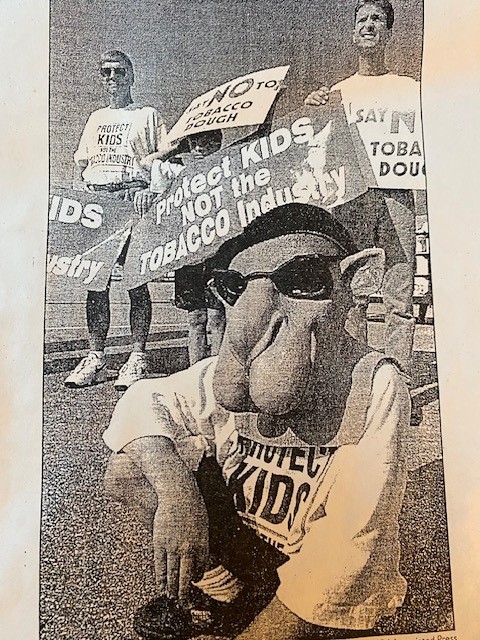
RHA staff as Joe Camel at the 1996 Democratic National convention in Chicago.
2001: The U.S. Centers for Disease Control and Prevention (CDC) announces the formation of the Tuberculosis Epidemiological Studies Consortium, a national collaboration of tuberculosis researchers that includes the leading TB experts in the country. CDC names Metropolitan Chicago Tuberculosis Consortium, convened by ALAMC, as one of 21 sites in the U.S. and awards ALAMC a 10-year contract to coordinate TB research projects from Chicago. In the ensuing 10 years, ALAMC coordinates local participation in almost 20 tuberculosis epidemiologic research studies.
Illinois adopts legislation (Public Act 92 0402) permitting school children with asthma to carry and self-administer their quick relief asthma medication while at school, provided they have physician and parent approval. The legislation follows several asthma policies in which asthma medications were kept locked away in school and were, at times, inaccessible, when needed. Respiratory Health Association co-led the policy effort and subsequent amendments to extend the law to after-school and park district activities. We begin offering asthma management education to children and teach parents, teachers, and caregivers how to help children manage their asthma.
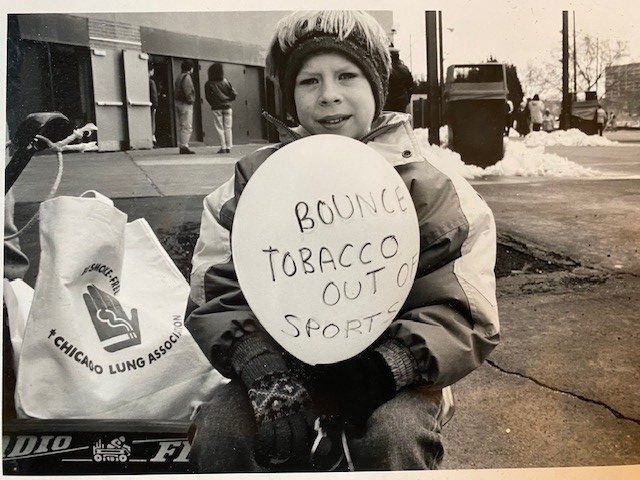
RHA demonstration at University of Illinois Pavilion against the university’s sponsorship of Virginia Slims Tennis tournament.
2003: Wilmette, one of the 21 communities exempt from state preemption, passes the first 100% comprehensive smoke-free ordinance in Illinois. The ordinance prohibits smoking in publicly accessible places, including restaurants, bars, and clubs. The ordinance was supported by Wilmette residents Joel Africk, ALAMC President & CEO, and Diana Hackbarth, member of ICAT member and our Board of Directors. Wilmette would soon be followed by Evanston and Skokie (2004), and Highland Park (2005).
Merck Childhood Asthma Network awards us, in collaboration with University of Illinois School of Public Health, a four-year $2 million grant to address pediatric asthma in Chicago’s Englewood community. The project aims to teach parents and caregivers of children with asthma in Englewood how to better understand and control their asthma, reducing hospitalizations and school days missed. The project is credited with significantly reducing asthma emergency room visits among children from Englewood.
2004: The Congressional COPD Caucus was formed to improve awareness and care of patients with Chronic Obstructive Pulmonary Disease (COPD) while supporting the search for a cure. We work diligently with the COPD patient community to engage Illinois legislators in the Caucus.
We release the inaugural edition of its Inspiration newsletter. This annual newsletter, edited by a volunteer pulmonologist, is written for people with COPD and their caregivers and contains practical tips for living well, the latest in COPD research, and legislative updates. Today, Inspiration reaches more than 9,000 persons living with COPD and their caregivers. Currently, the newsletter is sent to recipients in 36 states.
ALAMC lead efforts to prohibit insurance companies from restricting coverage of inhalers based on refill frequency. Based on feedback from the community ALAMC learned of restrictions some individuals had in accessing their lifesaving medication. ALAMC then worked with partners to change state law to protect the coverage of inhalers.
Along with partners, ALAMC supports Public Act 093-1015 which requires the Illinois Department of Public Health (IDPH) to develop a comprehensive statewide asthma management plan and for IDPH to provide leadership in Illinois for and coordination of asthma prevention and intervention activities. We have continued to place asthma at the forefront of public health and continued partner with IDPH to address asthma in Illinois.
We unveil four major health initiatives:
- “Catch Your Breath,” a women and lung health conference
• Chicago’s first Asthma Action Plan, an analysis of how Chicago can combat the asthma epidemic
• COPD Initiative, addressing the nation’s third leading cause of death
• READI program, which provides influenza vaccinations to 25,000 Chicagoans.
2005: The Chicago City Council votes to amend the Chicago Clean Indoor Air ordinance to make all places of employment, including restaurants, bars and sporting venues, 100% smoke-free. The ordinance, sponsored by Alderman Ed Smith, is the at the time the strongest municipal smoke-free ordinance in the country. The ordinance is the result of a two year long campaign by ALAMC and its partners, including public health organizations, nurses, medical students, and faith organizations. The ordinance was also supported by 150 local restaurant owners, led by Ina Pickney, Glen Keefer, and Dan Rosenthal, as the coalition Chefs & Owners United for Good Health. Ordinance goes into effect January 16, 2006.
ICAT and partners successfully urge the Illinois General Assembly to change statewide law to allow local communities to pass comprehensive smoke-free laws. Governor Blagojevich signs the law August 10, effective January 1, 2006. Shortly thereafter, Deerfield enacts a smoke-free ordinance, becoming the first community in the state to take advantage of renewed local control. In 2006, 30 Illinois communities used this new power to go smoke-free, the most ever in a calendar year anywhere in the U.S.
ALAMC helps pass Public Act 094-0328 which requires the Department of Public Aid to evaluate current standards of treatment of asthma for its beneficiaries. The review may include state-of-the-art programs in asthma disease management as well as evidence-based best practices for the early diagnosis, treatment, and control of asthma, particularly in children.
After months of advocacy by ALAMC and other organizations, the Illinois General Assembly enacts Public Act 96-670, which authorizes children living with asthma to self-carry and self-administer their asthma medication while at a recreational camp.
ALAMC hosts its first annual Living Better Together COPD Conference for patients and their caregivers. The educational conference shares with patients a variety of resources and tips for managing their COPD. Living Better Together is the largest such COPD patient gathering in the US.
2006: We help pass Illinois’ first No Idling Diesel Law, limiting diesel truck idling in metropolitan Chicago and metro East St. Louis to 10 minutes. We launch our six-year Addressing Asthma in Englewood project in collaboration with the University of Illinois School of Public Health. The project is funded by Merck Childhood Asthma Network. We receive additional support from Lloyd A. Fry Foundation.
Through community outreach ALAMC learned that individuals were denied coverage of additional spacers and peak flow meters. Because of advocacy by our organization, Medicaid reimbursement for Spacers and Peakflow meters increased from one per year to four per year with no prior authorization needed.
We lead efforts to pass a law protecting the rights of students to carry their prescribed epinephrine during the school day. The Illinois General Assembly passes Public Act 94-0792 to amend Section 22-30 of the School Code to address self-administration of epinephrine auto-injectors. The amendment provides that a school must permit the self-administration and use of an epinephrine auto-injector by a student under the same conditions as the use of an asthma medication.
2007: We play a leadership role in persuading the Illinois General Assembly to pass the Smoke-free Illinois Act, phasing out smoking in all workplaces statewide. We calculate the new law will save more lives than seatbelts.
We end our long affiliation with a national lung health non-profit organization to maintain local and statewide focus and local governance. ALAMC becomes the Respiratory Health Association of Metropolitan Chicago (RHAMC). RHAMC convenes the Illinois COPD Coalition to create a comprehensive Illinois COPD State Plan. With more than 100 collaborators across the state of Illinois, Coalition members represent a broad group of stakeholders, including community-based agencies, public health departments, professional organizations, patients and caregivers, health care providers, home health care agencies and pharmaceutical companies. The State Plan serves as a guide to reduce the incidence of COPD and COPD-related morbidity and mortality as well as improve the quality of life for those living with COPD. Some objectives for doing this include: (a) enhance the prevention of COPD, by promoting smoking cessation activities and increasing awareness of environmental causes of COPD; (b) educate primary health care providers tohelp increase diagnosis rates and to provide patients with the Global Initiative for Chronic Obstructive Lung Disease (GOLD) standard of COPD care; (c) increase COPD awareness among at-risk populations and others to improve health care decision-making; (d) provide a statewide network of resources for those living with COPD to increase self-management skills and adherence to treatment; and (e) increase surveillance through the Behavioral Risk Factor Surveillance System and other data.
RHAMC staff and medical providers conducted spirometry testing in the State Capitol to raise COPD awareness. During the day, 37 state legislators and key staff were tested with nearly 30% having abnormal findings ranging from mild to severe obstructions. RHAMC encouraged these individuals to follow up with their clinicians.
RHAMC launches Fight Asthma Now© and Asthma Management to educate students, parents, school and park district staff, and caregivers on how to properly manage asthma. The goal of these programs is to better arm children with asthma and their adult caregivers the health education necessary to control the disease, thereby reducing asthma emergencies and school absenteeism, and improving their quality of life. Fight Asthma Now© meets the specific needs of Chicago’s diverse communities. Based on guidelines from the National Asthma Education and Prevention Program (NAEPP), Fight Asthma Now© was developed with input from pediatricians, respiratory therapists, community educators and parents of children with asthma. Fight Asthma Now© covers content set forth in the NAEPP guidelines including: how to identify asthma symptoms, how to avoid asthma triggers, and proper medication technique. Fight Asthma Now© is an educational program for youth (3rd to 6th grade) and teens (7th to 12th grades) with asthma. The program includes culturally appropriate visual, auditory and experiential learning through diagrams and photographs, demonstrations, group discussion and individual reflection. All participants receive a free workbook, which includes an asthma action plan and a free spacer as enduring resources. Asthma Management is our free, one-hour educational program developed for adult caregivers, including, parents, caregivers, school staff, community groups, and daycare providers. Consistent with NAEPP guidelines, the program aims to help them better recognize and more effectively support children living with asthma. RHAMC’s Asthma Management program is tailored to meet the needs of each audience. Asthma Management for Parents is available in both English and Spanish. As of 2024, we have educated more than 20,000 students in Fight Asthma Now© and more than 30,000 school staff, parents, and caregivers in Asthma Management. We collaborate with a variety of community and government partners including Chicago Public Schools (CPS), Chicago Park District (CPD) and Chicago Department of Public Health (CDPH) to reach communities with high burden of asthma.
RHAMC launches Courage to Quit®, our evidence-based, comprehensive, multi-week group tobacco treatment program for adults. The program was created in collaboration with Dr. Andrea King of the University of Chicago and has been validated, as reported in the American Journal of Public Health.
Governor Blagojavich signs the Smoke-free Illinois Act (PA 95-0017) into law, requing all publically-accessible indoor spaces to be 100% smoke-free and prohibits smoking within 15 feet of openings to applicable buildings. The law is considered the strongest smoke-free law in the country, as it includes casinos and private clubs in its list of required smoke-free venues. The bill passed both houses of the Illinois legislature in May 2007 after a year-long campaign lead by ICAT members and supported by more than 450 organizations, and tens of thousands of advocates. The bill sets the floor for smoke-free requirements for the state and authorized all local governments, homerule and non-homerule alike, to adopt stronger smoke-free protections for their jurisdictions. In 2015, IDPH issued rules for administration of the act. The rules clarify, among other things, the definition of enclosed areas so as to close a loophole in the law for outdoor smoking huts. Since its inception, the law has been subject to numerous attempts – legislative and judicial – to weaken the law. RHAMC and ICAT partners have made defending the smoke-free act as their top policy priority each year and have successfully fought back against these shortsighted efforts.
2008: RHAMC helps create a public exposé on air quality levels in commuter train cars, finding that pollution inside some train cars is more than 10 times greater than outside. RHAMC helps secure $19.5 million in federal Congestion Mitigation and Air Improvement funding for local rail lines to clean up diesel engines in the Chicago area. RHAMC and Cook County Health and Hospitals System (CCHHS) established the Healthy Lungs Initiative (HLI), with funding from 2006 Cook County tobacco tax receipts. HLI focused on asthma and COPD self-management, tobacco cessation and reduced exposure to environmental tobacco smoke. The program provided services at 10 CCHHS outpatient sites, Stroger and Provident Hospitals, three additional community health centers and three substance use treatment programs. The program targeted communities of Cook County with greater burdens of asthma and tobacco related diseases with less access to the practical teaching HLI delivers. Between 2008-2016, HLI improved lung health in Cook County, delivering one on-one tobacco cessation counseling sessions to more than 124,000 individuals, 27,000 asthma and COPD educational sessions and over 11,000 group tobacco education sessions.
Working with the Stakeholders Collaborative to Improve Student Health, RHAMC is successful in passing legislation to require schools to provide chronic disease awareness education to teachers.
2009: President Obama signs the Family Smoking Prevention and Tobacco Control Act, giving the FDA authority over tobacco products. In recognition of RHAMC’s role in the fight against Big Tobacco, Joel J. Africk, President and Chief Executive Officer, is invited to the White House Rose Garden for bill signing.
RHAMC is successful in persuading the IDPH to add COPD questions to the 2010 Behavioral Risk Factor Surveillance Survey. Illinois is one of the first states to do so. The Behavioral Risk Factor Surveillance System is the largest phone public health survey in the U.S. and a key public health survey for policy and resource decision making. The inclusion of these questions will provide a better illustration of the scope of the COPD burden in Illinois including healthcare utilization and quality of life impact of COPD. Collecting this data can yield important information about the impact of COPD in Illinois and influence policies and allocation of resource for COPD prevention, diagnosis, treatment and research.
2010: RHAMC is awarded a two-year, $11.5 million CDC grant to establish the Chicago Tobacco Prevention Project; RHAMC leads the project, in collaboration with CDPH, to reduce smoking in Chicago and increase smoke-free environments (such as parks, etc.). The Chicago Tobacco Prevention Partnership partners with 30+ organizations to address the needs of Chicago’s many vulnerable populations (e.g., veterans, certain minorities, hospitality workers) who smoke at rates in excess of Chicago’s average. Chicago’s youth and adult smoking rates subsequently drop to historic lows. RHAMC’s work is regarded as contributing to record youth and adult low smoking rates in the ensuing years. The city also adopts a 5-minute no-idling policy for all city-owned trucks and cars.
Governor Quinn signed new, RHAMC-sponsored legislation into effect that allows children to carry and administer their quick-relief asthma inhalers at school without physician consent. Students now only need to submit note from a parent or guardian and a copy of their prescription having previously required physician consent. RHAMC sought to remove this barrier in order to improve compliance with students being able to carry their inhaler in school.
2011: RHAMC receives the American College of Physicians’ prestigious Edward R. Loveland Memorial Award. The award recognizes Respiratory Health Association’s work to support people living with lung disease through research, advocacy, and education.
RHAMC developed a regional Midwest COPD Network in Illinois, Indiana, Michigan and Ohio to exchange and expand best practices of COPD awareness and education. In addition to its role in leading coalitions, RHAMC has also been instrumental in engaging legislators in national COPD efforts. We also assisted with getting resolutions adopted for National COPD Awareness month in Indiana and Michigan.
2012: RHAMC and its Clean Power Coalition partners achieve the closure of the Fisk and Crawford coal-fired power plants in Pilsen and Little Village in Chicago. These two plants were responsible for an estimated 42 deaths, 66 heart attacks, and 720 asthma attacks annually.
Coordinated Healthcare Interventions for Childhood Asthma Gaps in Outcomes (CHICAGO) PLAN was designed to improve the health of children with uncontrolled asthma. It is a research study to compare traditional emergency department care with enhanced care and home-based interventions to learn which produces the best outcomes for children. The CHICAGO Plan spans Chicago’s south and west side neighborhoods, which are the hardest hit by asthma.
Coordinated Healthcare Interventions for Childhood Asthma Gaps in Outcomes (CHICAGO) Collaboration II (U34) is a city-wide collaborative to complete a community needs assessment and develop an evidence-based, multi-sector asthma care model to address pediatric asthma where children live, learn, play and receive medical care for high-risk children in Chicago.
On January 26, 2012, CPS Board of Education approves a new asthma policy, increasing awareness and support of students with asthma. The new policy reduces barriers for students to carry and self-medicate using their quick-relief inhalers. It also requires administrators to ask for information about students with asthma at the beginning of each school year, including asthma action plans; and all staff who interact with children will receive asthma training every two years.
2013: RHAMC becomes Respiratory Health Association (RHA) as it expands its respiratory health efforts throughout Chicagoland, Northwest Indiana, and nationally.
The Board of Health, local health organizations including RHA, and Chicago aldermen host menthol town hall meetings across the city to gather resident testimony on the impact of menthol tobacco on their community and ideas to reduce the negative impact of menthol. As a result, the City of Chicago’s passes a historic ordinance restricting the sale of flavored tobacco products within 500 feet of Chicago schools, the first regulation anywhere to restrict mentholated tobacco products. After Chicago’s ordinance, more cities, including San Francisco and Minneapolis, act to restrict menthol tobacco.
2014: Chicago adds electronic nicotine delivery systems (e-cigarettes) to its clean indoor air act. Acting only one day behind New York City, Chicago is the second city to protect its residents and workers from exposure to secondhand aerosol from the devices. Limiting public use of e-cigarettes also helps prevent smoking behaviors from becoming a social norm. ICAT members, including RHA, testified in support of the ordinance and launched media efforts to educate on the potential dangers and unknown efficacy of the devices. RHA has continued to advocate for inclusion of e-cigarettes in local smoke-free ordinances and at the state level. Since Chicago’s ordinance more than 20 communities in Illinois have added e-cigarettes to their smoke-free laws.
RHA persuades the Chicago Park District to adopt a smoke-free policy covering all 580 parks, 90 gardens, 90 museum campuses, nine lakefront harbors, nine ice skating rinks, and 24 miles of lakefront property. In doing so, it becomes the largest smoke-free park district in the country. In the coming years, more than 50 municipalities across Illinois would adopt smoke-free policies, many with assistance from RHA.
RHA partners with Cook County Department of Public Health on a three-year, CDC-funded project to increase the number of smoke-free housing options in suburban Cook County. The project results in the adoption of, among other accomplishments, a 100% smoke-free policy by the Housing Authority of Cook County. This smoke-free policy covers 23 buildings, 1,800 public housing units, and 200 units of multifamily housing. More than 3,500 residents are ultimately protected from exposure to secondhand smoke in the home.
The City of Evanston becomes the first city in Illinois to raise the minimum legal sales of tobacco from 18 to 21. This ordinance set in motion a chain of municipalities in Illinois adopting tobacco 21. In the following two years.
2015: Per Public Act 95-985, all publicly funded institutions of higher education in Illinois become 100% smoke-free. While dormitories had been required to be smoke-free since 2008, this law expands that policy to require all campuses to be smoke-free. This law followed on the heels of several successful voluntarily smoke-free campus policies, including at University of Illinois at Chicago, which was assisted by RHA.
2016: RHA serves on the steering committee for Healthy Chicago 2.0, Chicago’s four-year plan to improve health and well-being throughout Chicago communities. RHA and the CDPH work closely to recognize the need to address asthma, tobacco, and air quality as priority public health concerns.
Kathleen Hart Solovy, in memory of her husband Jerold S. Solovy, a distinguished Chicago trial lawyer and former chairman of Jenner & Block, establishes the annual Solovy Endowment for Advancement in COPD at RHA. Jerry lived for many years with COPD, and both he and Kathleen recognized the health burden to those who live with COPD. The Endowment creates a research award for lung disease researchers who have made outstanding contributions to COPD.
RHA works with Chicago and neighboring cities (Highland Park, Deerfield, Naperville, and Oak Park) to pass Tobacco 21 ordinances, raising the minimum legal sales age of tobacco products from 18 to 21 years old.
RHA successfully advocates for statewide legislation to require schools in Illinois to have asthma emergency protocols on file. RHA, in partnership with the Illinois State Board of Education (ISBE), launches an online asthma management training module for school staff members to adopt such plans and fulfill their chronic disease management education requirements.
RHA and environmental partners work with the Illinois General Assembly to pass the Future Energy Jobs Act, the largest state energy bill in the U.S. to date. The Act ramps up renewable energy production in Illinois, including wind and solar, expands energy efficiency programs, and creates green technology job training programs for low-income and underrepresented populations.
Respiratory Health Association trains health educators outside Chicago in its two signature programs, Courage to Quit®and Fight Asthma Now©. National Urban League® hires RHA to train tobacco program staff from Atlanta, Philadelphia and Washington, and Breathe DC hires RHA to teach asthma educators in Washington D.C. how to deliver Fight Asthma Now©. RHA had previously trained personnel in Los Angeles Unified School District in the program. During 2016, RHA’s smoking cessation and asthma programs reach 5,000+ people.
U.S. Department of Housing and Urban Development (HUD) announces rule to make all public housing in the U.S. smoke-free by August 2018. Previously, HUD had “strongly encouraged” housing authorities to adopt smoke-free policies since 2009. Prior to the rule’s announcement, the CDC issued a study finding that a smoke-free public health rule would save the U.S. $341 million in annual health care expenditures, $108 million in housing renovation costs, and $72 million in smoking-attributable fire loss. In September 2017, RHA and other tobacco control partners from Illinois were invited to the CDC’s offices in Atlanta for a training on how to assist with implementation of the rule.
RHA leads efforts to pass Public Act 099-0843 to improve asthma emergency protocol in schools. The legislation requires ISBE to develop a model emergency response protocol, and for school districts to implement their emergency protocols by January 1, 2017. The legislation also requires school staff who work with students with asthma to complete training. Schools need to request an asthma action plan each year from parents or guardians of a student with asthma. RHA works with IDPH to develop statewide training materials, including an educational webinar which is viewed by more than 4,000 school staff.
A federal judge sides with a coalition of environmental and health groups, including RHA, in a lawsuit filed against Peoria’s E.D. Edwards coal plant alleging that the company is “emitting an excessive amount of soot pollution.”
2017: RHA is awarded a two-year grant from CDPH to deliver smoking cessation programs for vulnerable populations in Chicago. In response, RHA creates the Chicago Quits initiative, bringing together 20+ health care, social services and other community-based partners across the city to provide cessation services to the populations they serve. As of 2024, RHA continues to receive City funding to support tobacco cessation efforts.
RHA developed, with support by the Institute of Design at the Illinois Institute of Technology, the COPD Caregiver’s Toolkit to address the informational and support needs of persons caring for a loved one with COPD. RHA developed all Toolkit content to be guidelines-based and consistent with credible health sources including GOLD and the National Heart, Lung, and Blood Institute (NHLBI).
2018: RHA successfully lobbies Illinois to become the 6th state in the nation to raise the minimum age to purchase tobacco products to 21.
RHA trained more than 1,000 school nurses on how to best manage asthma in their schools at the request of IDPH. With funding from ISBE, RHA expands its Fight Asthma Now program, reaching more than 1,200 students across eight counties in Illinois.
RHA successfully led advocacy efforts to secure the passage of Public Act 100-0726, which allows all schools to maintain a stock of “undesignated” asthma rescue medication and authorizes school nurses and other trained school staff to administer the medication in the event of respiratory distress. RHA worked with ISBE and IDPH to develop a training a guidance materials for school staff. Illinois becomes the 11th state to address the need for emergency asthma medications in schools.
RHA receives a $25,000 grant from CVS Health to help RHA extend the reach of Courage to Quit®.
2019: RHA works with the Chicago City Council to pass a resolution mandating 100% renewable energy in the city by 2035 and a fully electric bus fleet by 2040. Jewelry Television (JTV) begins a national fundraising campaign bringing greater attention to women’s lung health. In succeeding years, the campaign would raise nearly $1 million.
RHA enters a nationwide partnership to deliver Courage to Quit® to Trinity Health System providers to increase the System’s capacity to address tobacco use among its patients. Trinity operates 94 hospitals and hundreds of satellite primary care centers in 22 states.
ISBE awards RHA a Healthy Community Investments Grant to bring school-based asthma education to more people in Chicago and throughout Illinois.
2020: RHA issues special communications providing credible information and support during the COVID-19 pandemic, advises the COPD community on what steps to take to reduce the risk of catching COVID, and develops Long COVID patient resources.
With the help of community and legal partners, RHA secured settlement of the Edwards Power Plant litigation, which resulted in an agreement to close Edwards and an $8+ million settlement for local communities.
Courage to Quit® expands nationwide, and Counsel to Quit®, a course for medical professionals to learn how to talk to patients about quitting, launches.
RHA successfully advocates for a $1 million increase in state funding for asthma management programs.
RHA, in partnership with researchers at the University of Chicago, releases a report analyzing residents’ proximity to high-volume CTA routes and lung disease. The report found that Chicagoans living within 500 meters of the busiest bus routes had asthma rates 8.4% greater than the overall city rate, and COPD rates 10.6% higher than the overall rate across the city. Additionally, residents living closest to any of the CTA’s seven bus garages had asthma rates more than 12% greater than the citywide average and COPD rates 23.6% greater than the citywide average.
The Chicago City Council, with support from Mayor Lightfoot, passed an ordinance which requires new residential buildings with five or more units, and non-residential developments with 30 or more parking spaces to have 20 percent of parking spaces “electric vehicle ready.”
2021: With help from the Learn More Breathe Better® program of the NHLBI, RHA launches Project STRENGTH (Support for Transitioning Rehabilitation and Exercise Now Going to Home), a resource helping people with COPD.
After years of advocacy by RHA and partners, the Climate and Equitable Jobs Act (CEJA) is signed into law. CEJA includes provisions to phase out carbon emissions from the energy and transportation sectors. CEJA directs the IEPA to establish rebate and grant programs for electric vehicles and charging stations and oversee the phase-out of fossil fuel-fired electrical generation units.
In partnership with the Illinois Network of Child Care Resource and Referral Agencies, RHA develops a new tool for childcare providers across the state to help children under their care living with asthma. Since its release, more than 2,500 people have viewed the English or Spanish versions.
RHA successfully advocated for $1 million in funding in Illinois to help expand access to lung cancer preventative services.
Thanks to a grant from Will Rogers Institute, RHA launched a new project to develop patient-facing resources about the potential impacts of long COVID.
In partnership with the NHLBI’s Learn More® Breathe Better™ Program, RHA creates an online version of our COPD Caregiver’s Toolkit. Now, informal caregivers across the country can more easily access resources to help navigate the challenges of providing care to their loved ones.
RHA once again partners with CHEST Foundation to fund promising research studying disparities in women’s lung health.
In partnership with the Illinois Health Practice Alliance, a behavioral health services group with more than 100 clinics serving Medicaid patients in Illinois, RHA expands access to our smoking cessation programs. RHA trains providers in these clinics on our Counsel to Quit® and Courage to Quit® programs, which they will deliver to people who smoke at some of the highest rates.
2023: $2.4 million was appropriated in the State budget to support implementation of the RESCUE Illinois Schools initiative, providing more than 3,000 schools with training, medication and other resources to maintain and administer stock albuterol during asthma emergencies. The program was first rolled out in the 2023-2024 school year with nearly 75% of treated students able to return to class following their emergency.
2024: RHA and partners successfully advocate for a cap of $25 per month on inhalers used by asthma and COPD patients.
RHA partnered with the Learn More Breathe Better program of the National Heart, Lund and Blood Institute to make the COPD Caregiver’s Handbook available online. Through 2024, more than 20,000 visited the Handbook website.
With support from IDPH, RHA developed an Asthma Caregiver’s Handbook for providers to share with the families they serve. Nearly 7,000 copies were ordered and delivered, with large numbers going to school nurses.