
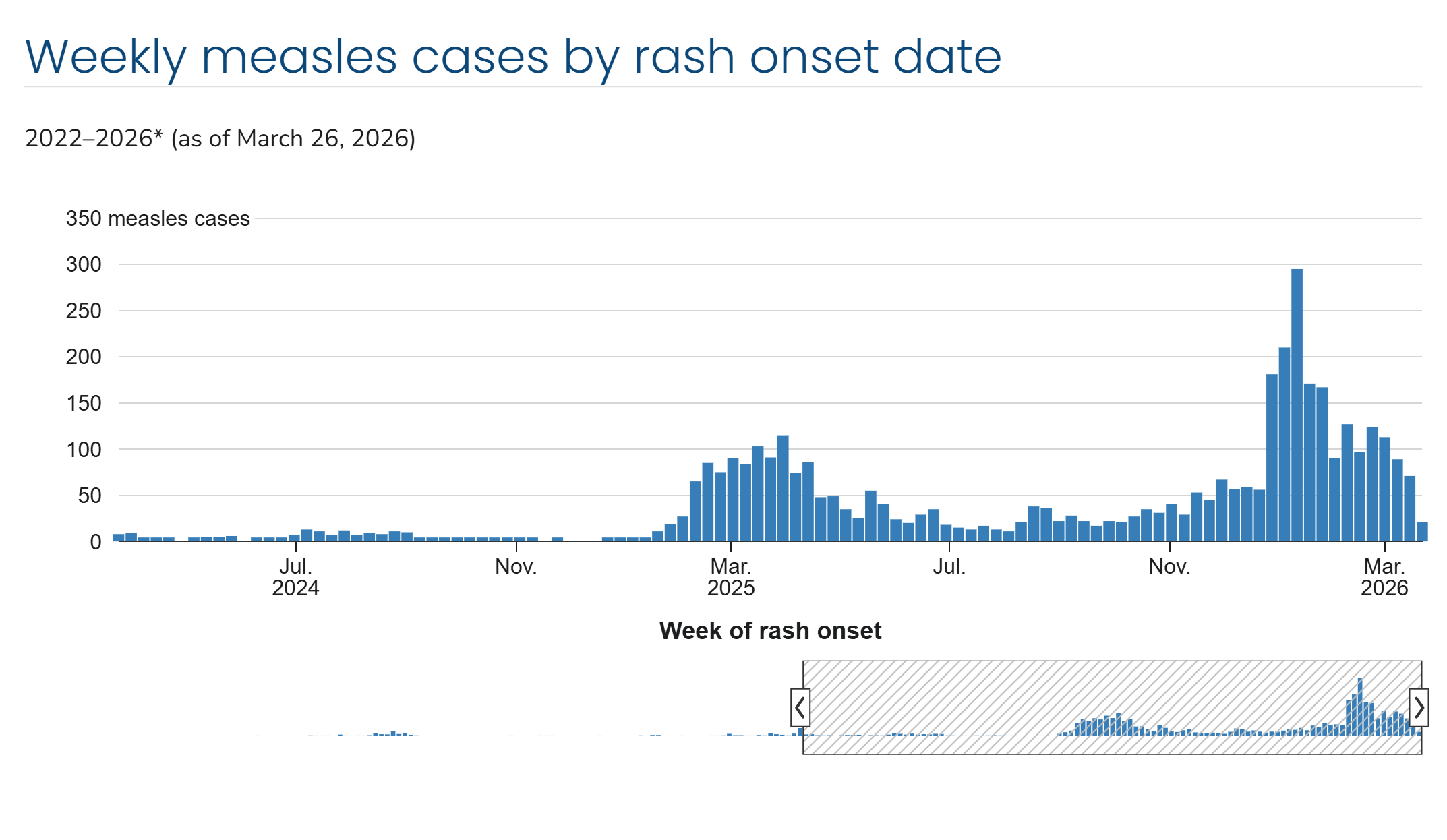
Measles cases remain elevated across the United States, with 2,260 confirmed cases reported in 2026 through the latest reporting period. Half of all cases have occurred in school-aged children, and one in five has been in children younger than 5 years old. Approximately 93% of reported cases were among people who were unvaccinated or whose vaccination status was unknown, and 6% of patients required hospitalization. These numbers are an important reminder that measles spreads quickly and can lead to serious complications, especially for young children and people who are not protected by the MMR vaccine.
Measles (MMR) vaccination is recommended for:
- Children, with the first dose at ages 12–15 months and the second dose at ages 4–6 years
- Children and teens who have not received both recommended doses
- Adults who do not have evidence of immunity to measles
People who are pregnant or have weakened immune systems should talk with their healthcare provider, as the MMR vaccine may not be recommended for them.
Measles infects the respiratory tract and then spreads throughout the body. Symptoms typically appear around 10 to 14 days after exposure; these typically include:
- Fever
- Dry cough
- Runny nose
- Sore throat
- Inflamed eyes
- Ear infection
- Tiny white spots with light centers on a red background found inside the mouth on the inner lining of the cheek, and/or
- A skin rash made up of large, flat blotches. The rash usually appears 14 days after exposure, starts at the hairline and spreads down the body. Some immunocompromised people may not develop the rash. A person is generally contagious the four days before and four days after the onset of a rash.
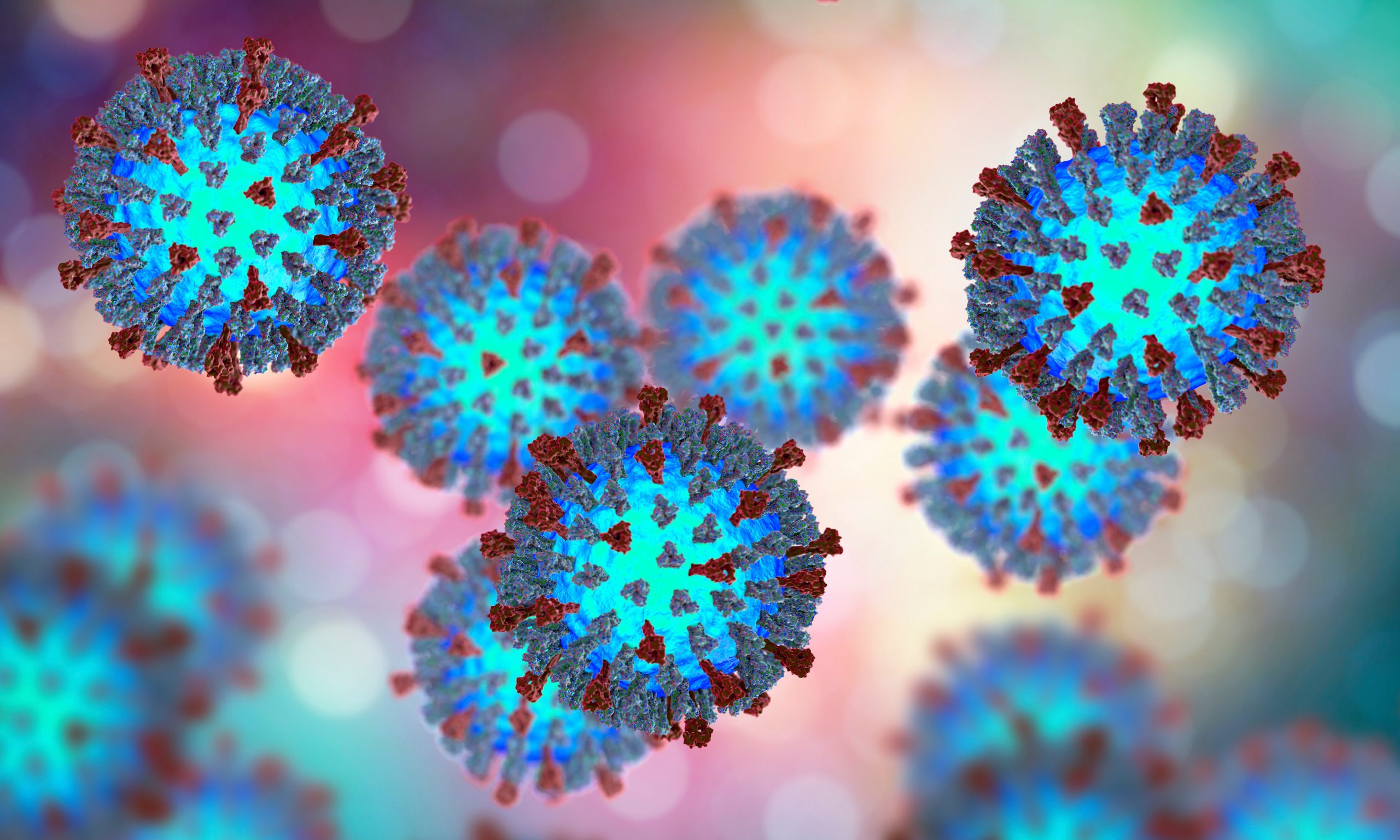
As one of the most contagious diseases in the world, measles spreads easily through the air when an infected person breathes, coughs, or sneezes. If one person has measles, up to nine out of ten unprotected individuals nearby may become infected.
The measles virus severely weakens the immune system by wiping out up to 73% of the antibodies that defend against diseases a person was previously immune to. Measles can also cause severe complications, including blindness, brain damage, and even death.
Only the measles, mumps, and rubella (MMR) vaccine can prevent the disease. The measles vaccine is highly safe and effective. A single dose provides 93% immunity, while two doses increase protection to 97%, and generally provides lifelong immunity. Vitamin A is not a substitute for vaccination. Vitamin A supplementation does not prevent measles infection and can damage the liver.
Most Americans are vaccinated against measles routinely in childhood. The first dose should be given between 12-15 months of age and the second between the ages of 4-6 years old. If you were vaccinated before 1968, check with your healthcare provider about a revaccination.

Parents, when you take your child to the pediatrician for their school physical, remember this: the measles vaccine protects your child, and the children in their class, from getting sick. 2026 has already broken the record for the highest number of U.S. measles cases, and we still have five months to go.
Learn more on how to keep your children safe this upcoming school year below.
Many health departments and community health centers provide free MMR vaccinations for all, regardless of insurance status. The Illinois Department of Public Health has a vaccination locator here.
All people 12 months or older who plan to travel internationally should ensure that they have received 2 doses of MMR at least 2 weeks prior to travel. People who are frequently around international travelers, such as taxi drivers or those who work at airports should also double check their vaccination status, as their risk of exposure to measles is heightened.
Individuals who may have been exposed should notify their healthcare provider to determine the need for testing. If symptoms develop, they should notify their healthcare provider before going to a medical office or emergency department to prevent other patients and medical staff from possible exposure. Exposed individuals that are unvaccinated should talk with their doctor about getting MMR vaccine, doing so may prevent severe measles if given early enough after exposure.