School Nurse Works with RESCUE Illinois Schools to Support Students with Asthma
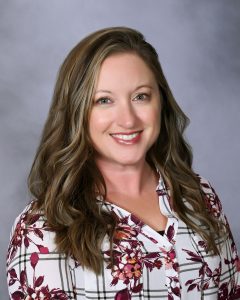
Photo: Heather Kypta
Before RESCUE supplied stock albuterol, school nurses had few options when a student arrived in respiratory distress. Heather Kypta, a school nurse in the East St. Louis metro, describes what these situations felt like: “There wasn’t a lot I could do for them. They would be scared, obviously, sometimes crying.” Kypta admits she dreaded these encounters, knowing the child felt “like you’re breathing through a straw” while waiting for first responders to arrive.
Today, RHA administers the RESCUE Illinois Schools program, funded by the State of Illinois, which allows schools to purchase equipment and emergency asthma medication (known as stock albuterol), as well as develop both print and online training materials. Although the law authorizing undesignated stock albuterol in schools passed several years ago, there was no funding or infrastructure to supply equipment or train school nurses, until now.
With RESCUE stock inhalers on hand, a quick assessment is all that’s needed. The nurse simply retrieves the stock dose and administers it immediately, providing relief on the spot rather than waiting for emergency responders.
In its second school year, Illinois is already seeing positive results from the RESCUE program. Schools are using the stocked albuterol and related equipment during asthma episodes, allowing 80% of affected students to remain in class rather than going home or to the emergency room.
Kypta began her career in the neonatal intensive care unit after college before moving into community nursing, serving Head Start programs and K‑8 schools in Milwaukee’s most underprivileged neighborhoods. She is a certified nurse in Illinois and a DNP student at the University of Illinois Chicago, currently collaborating with Dr. Andrea Pappalardo on asthma and stock inhaler study programs and outcomes. After a stint in Manhattan, Kansas, where she navigated the urban–rural divide and cared for both undocumented Honduran immigrants wary of the healthcare system and children of millionaires, she took on her current role overseeing the Belleville School District, where 60% of students live below the poverty line alongside peers in million‑dollar homes.
In Illinois, you can serve as a school nurse with just an RN, but to handle Individualized Education Programs (IEPs) or 504 plans, one needs a special certification. “While I had seven years of school‑nursing experience, they wouldn’t let me touch an IEP or write a healthcare plan, and I just didn’t like being stuck in that box,” Kypta said. “That’s when I went to UIC, got my school‑nurse certification and said, ‘Okay, we’re changing things around here.’”
“I’ve told principals, ‘I will lovingly go head‑to‑head with you to advocate for a child.’ That’s our job. That’s our work. That’s what we should be doing.”
During COVID, the district had no undesignated inhalers until RESCUE funding became available. When she first requested stock inhalers, her superintendent resisted, insisting they were for nurse use only. “Well, that’s better than nothing,” she told him, knowing she couldn’t be everywhere at once to help 700 students and more than 100 staff. She worked to empower teachers and staff to administer the inhalers, too.
After months of chasing the principal down hallways, sending emails, and asking to present at board meetings, the board finally approved a policy change in March 2024. To date, the district has recorded 12 uses of the stock inhaler.
Kypta recalls one morning a father tore into the school parking lot, leaving his car in the middle of the street after his babysitter called to say his son was struggling to breathe. With the mother 30 minutes away, at work, and the doctor’s office closed until 7:30 a.m., Kypta retrieved the child’s nearly empty personal inhaler, then tapped the RESCUE stock albuterol and activated the RESCUE protocol. As she administered puffs, Kypta stayed on the phone with the doctor’s office, providing the school’s address, dosage given, and protocol steps. While the student’s breathing steadily improved, outside, the father, a normally stoic man, began to sob, overwhelmed by relief that his “maniac” drive to the school had kept his son from needing an ambulance.
Though the child later needed steroids and antibiotics at the hospital, he arrived already stabilized. In talking afterward, the father revealed his son had been too embarrassed to ask for his inhaler after evening basketball games at home. That day’s intervention not only averted a crisis but also deepened the family’s trust in the school health program and helped the student learn that it’s okay to need his inhaler.
“Now that I have the stock inhalers, it’s so different,” says Kypta. Yet challenges remain. “Health literacy is half the battle. And for some it’s a money issue. For others maybe it’s a priority issue. Sometimes going to the doctor or picking up another inhaler at the pharmacy isn’t a priority, because work took priority, so they could feed the family, or they didn’t have a car. There are so many other competing issues for these families and sometimes life gets in the way.” Addressing these barriers will be essential as RESCUE grows to ensure every child can fully benefit from the program.