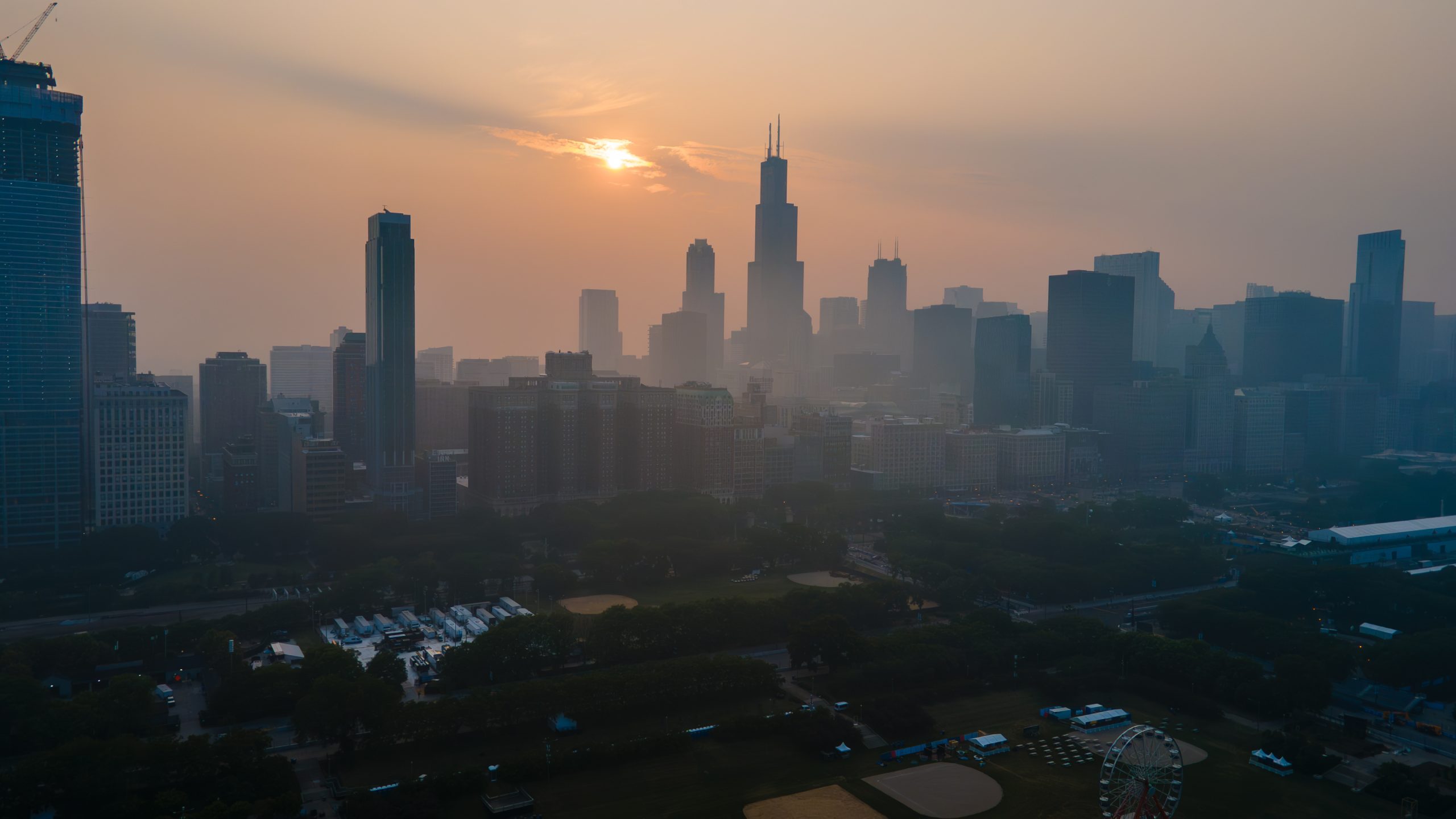
Bad air quality days are becoming an increasingly common part of Chicagoland summers. But what’s causing it, and what can you do to protect your lungs?
What’s causing the poor air quality?
A lot of the fine particle air pollution is caused by wildfire smoke blowing into the Midwest from Canada. Accelerating climate change means hotter summers that dry out the landscape, and more trees killed by insects that thrive in a warmer world, creating more fuel for fires to start and spread. Rising temperatures also lead to more frequent storms, increasing the chances for lightning strikes to set dried-out forests ablaze. This, combined with wind patterns blowing air from the north down into Chicago, has increased the number of days with bad air quality that our region experiences every summer.
Local heat waves, also increasing with global warming, can lead to poor air quality as well. The extreme heat and stagnant air during a heat wave increase the amount of ozone smog pollution, pushing air quality into unhealthy territory even without wildfire smoke.
How does wildfire smoke and smog affect your body?
Breathing in smoke and smog can have both immediate and long-term consequences for your health. Some of the immediate effects include:
- Coughing
- Wheezing
- Fatigue
- Headaches
- Chest pain
Prolonged or frequent exposure to air pollution from wildfire smoke or smog can lead to chronic respiratory conditions and other health risks. This is because smaller particles in the smoke, known as PM2.5, can get deep into your lungs, into your bloodstream, and throughout your body, leading to longer-term health effects. People with existing lung health conditions, such as asthma or COPD, are especially at risk, as breathing in wildfire smoke or smog can cause exacerbations and symptom flare-ups.
What can you do to protect yourself?
Reducing your exposure to smoke and smog is the number one way to reduce your risk of negative health effects.
- Be aware of the outdoor air quality in your area by checking the Air Quality Index, which can be found on sites such as airnow.gov or your weather app.
- Sign up to get automated email alerts when air pollution increases at enviroflash.info.
- If at all possible, stay indoors, stay comfortable, and limit exertion when air quality levels are of concern.
- If you don’t have AC, try to get to a location that does, such as a friend or family member’s home, a public library, park district facility, or city cooling center. You can find a list of Chicago cooling centers here.
- Use an air purifier with a HEPA filter to reduce the amount of pollution you’re exposed to indoors.
- If you have to go outside on days with poor air quality, wear a well-fitted N95/KN95 mask to reduce PM2.5 exposure and limit your time outdoors.
- If driving in a vehicle equipped with a cabin air filter, use the recirculate function on your AC.
- Make sure to have your quick-relief medications near you and easily accessible
- Follow the advice of your healthcare provider.
To learn more about how you can take care of yourself and your lungs after a wildfire, click the button below.